Home & Lifestyle · Spring 2026
How to Set Up Your Home for Spring Entertaining in Napa Valley
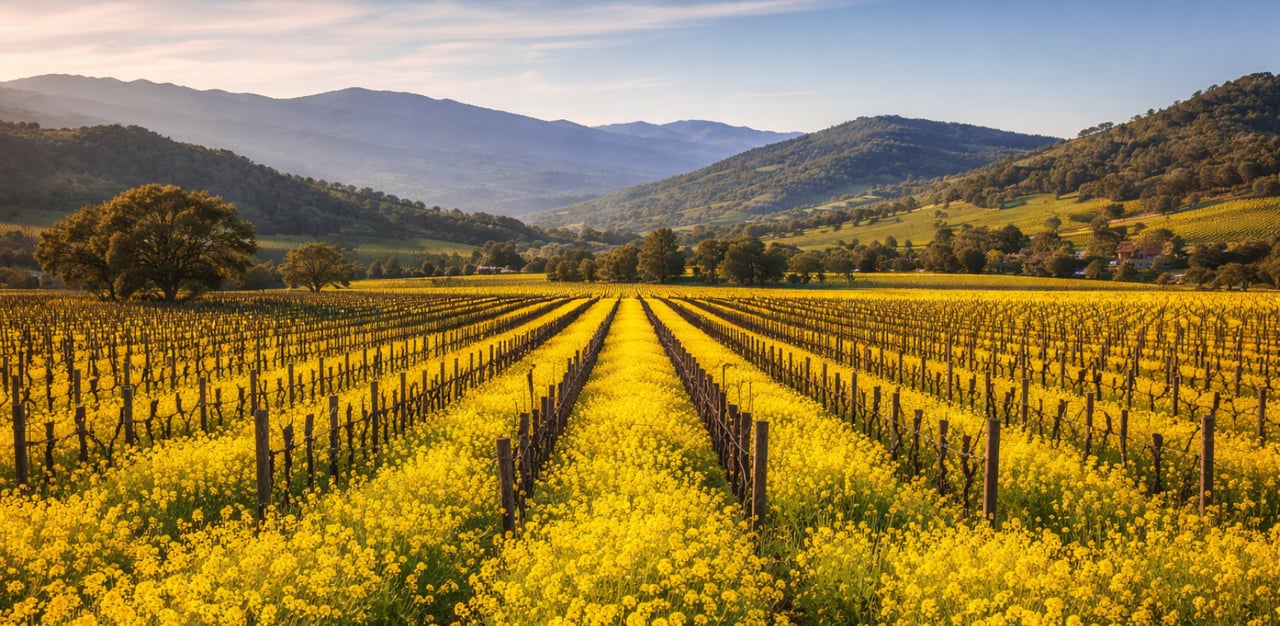
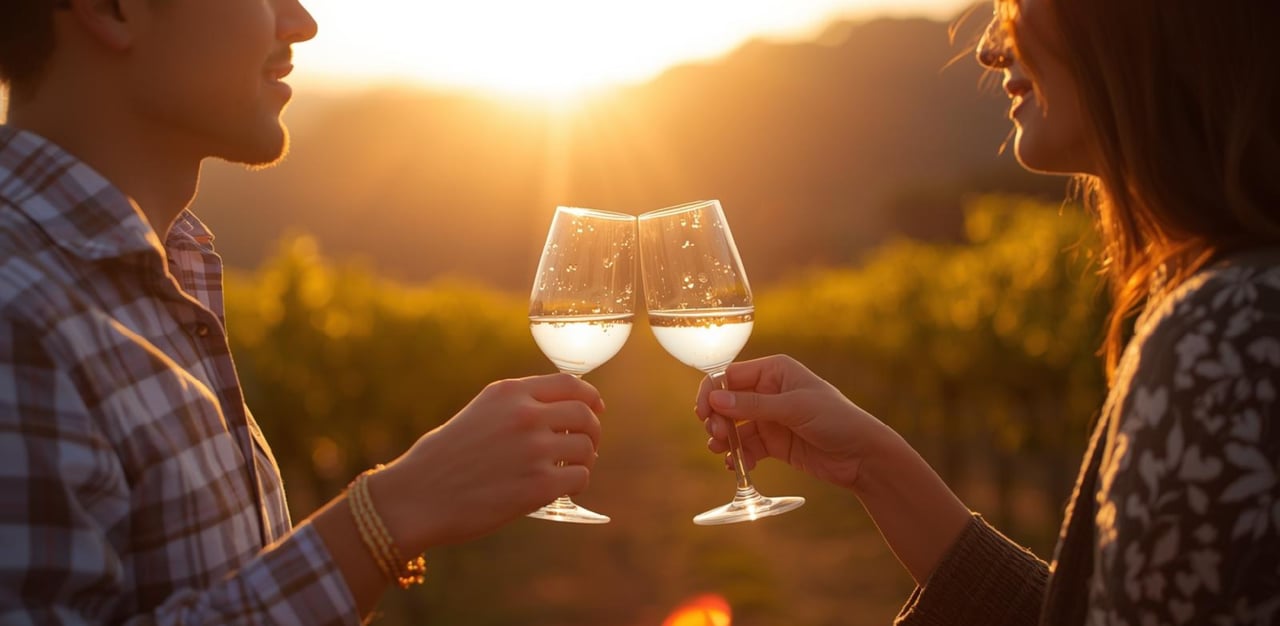
In Napa Valley, entertaining is not a season. It is a way of living. Spring brings a particular energy to it: doors open, evenings are warm enough to linger, and the valley outside your windows is at its most beautiful. Here is how to set up your home so it is always ready for the people you want around you.
How do you set up a wine area at home for entertaining?
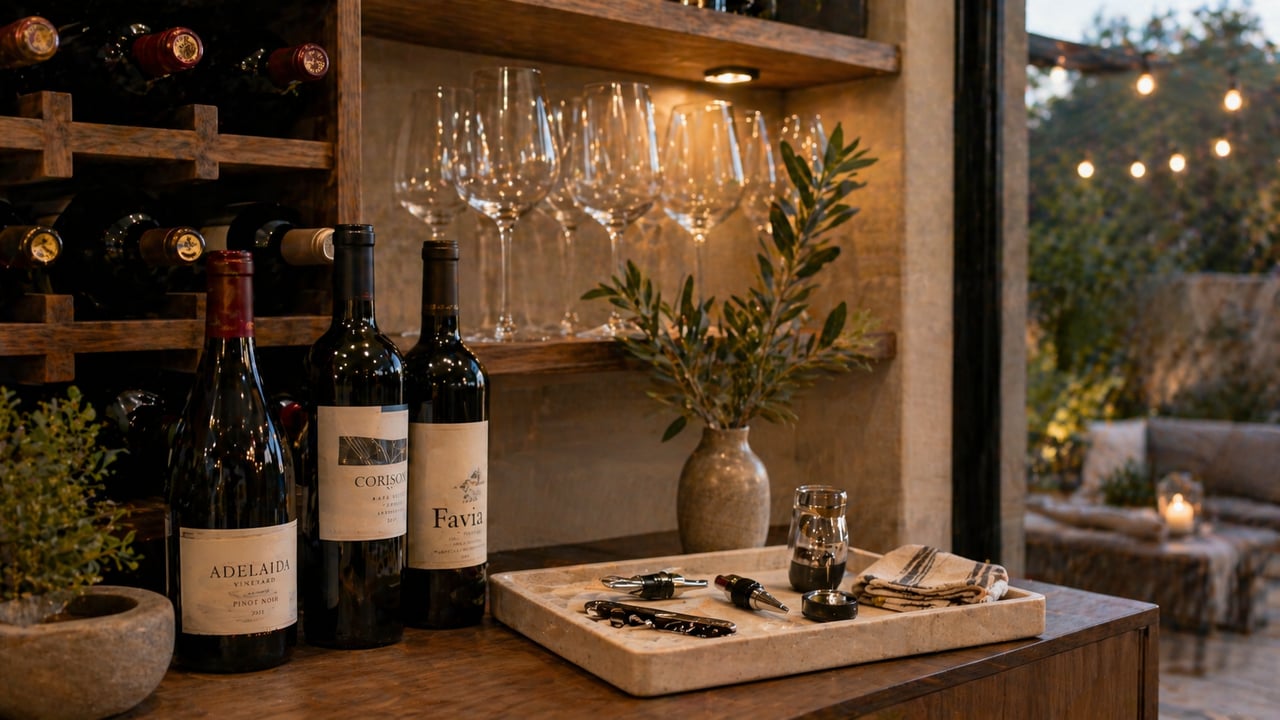
In Wine Country, wine is not a decoration. It is part of daily life. But the way you store and present it says something about how seriously you take the experience of sharing it with others. A dedicated wine area does not require a full cellar or a custom built-in. It requires intention.
The most effective wine areas are organized by story rather than by price. Group wines by producer, by region, or by occasion. A section for the everyday bottles you open on a Tuesday night. A shelf for special occasion wines from producers you love. A small rotating selection of what you picked up recently on tasting visits around the valley. This gives guests something to explore and gives every bottle a context beyond its label.
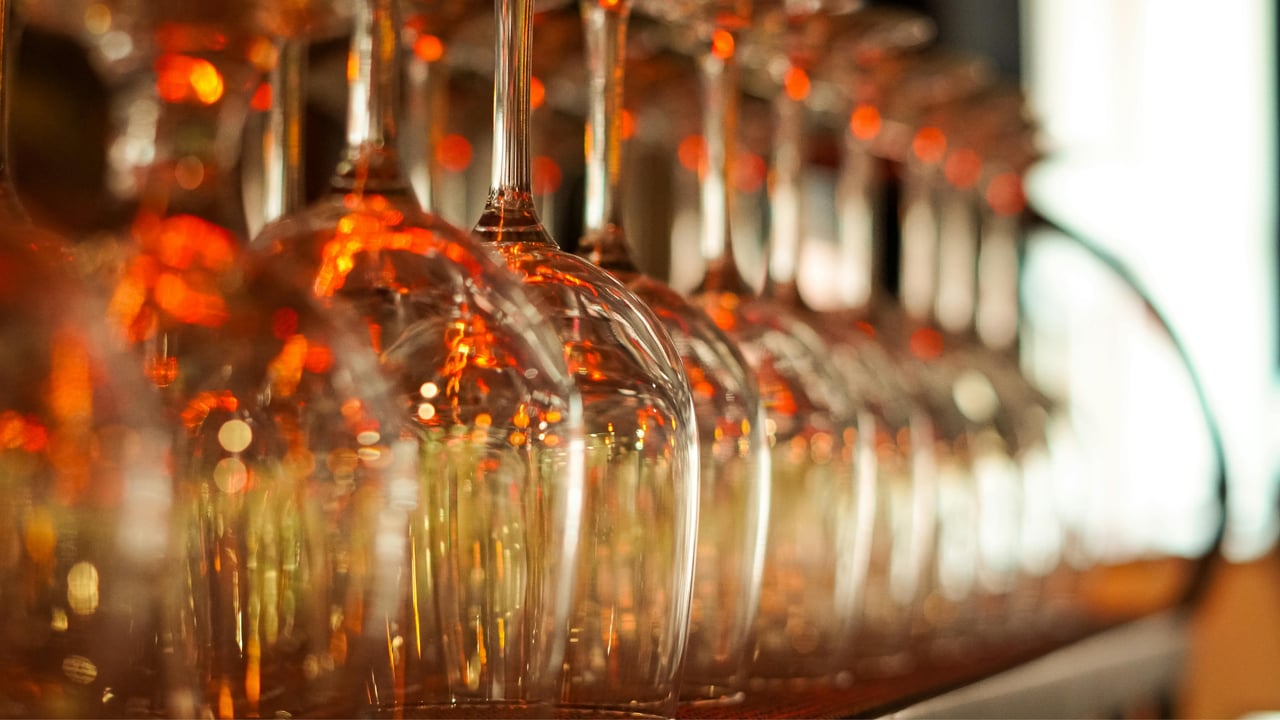
For the display itself, natural materials always outperform synthetic ones in a Wine Country setting. A walnut or reclaimed wood wine rack. Linen-lined shelving. Unlacquered brass hardware if you are working with cabinetry. Keep the glassware nearby and visible. A beautiful set of stems on open shelving signals that the space is ready to be used, not just admired.
Temperature matters more than most hosts realize. Reds served slightly too warm lose their structure and whites served too cold lose their aromatics. A useful rule: move your reds to a cooler spot about 30 minutes before guests arrive, and pull whites from the refrigerator 10 to 15 minutes before pouring. In Napa Valley you have access to wines with real nuance. Serving them at the right temperature is how you honor that.
A quality wine key. A foil cutter. A simple aerator for young reds. A bottle stopper for anything opened that does not get finished. A small cloth or linen napkin for drips. Keep it all on a ceramic or stone tray next to the rack and everything you need is always exactly where it should be.
What should go on a bar cart for a Wine Country home?
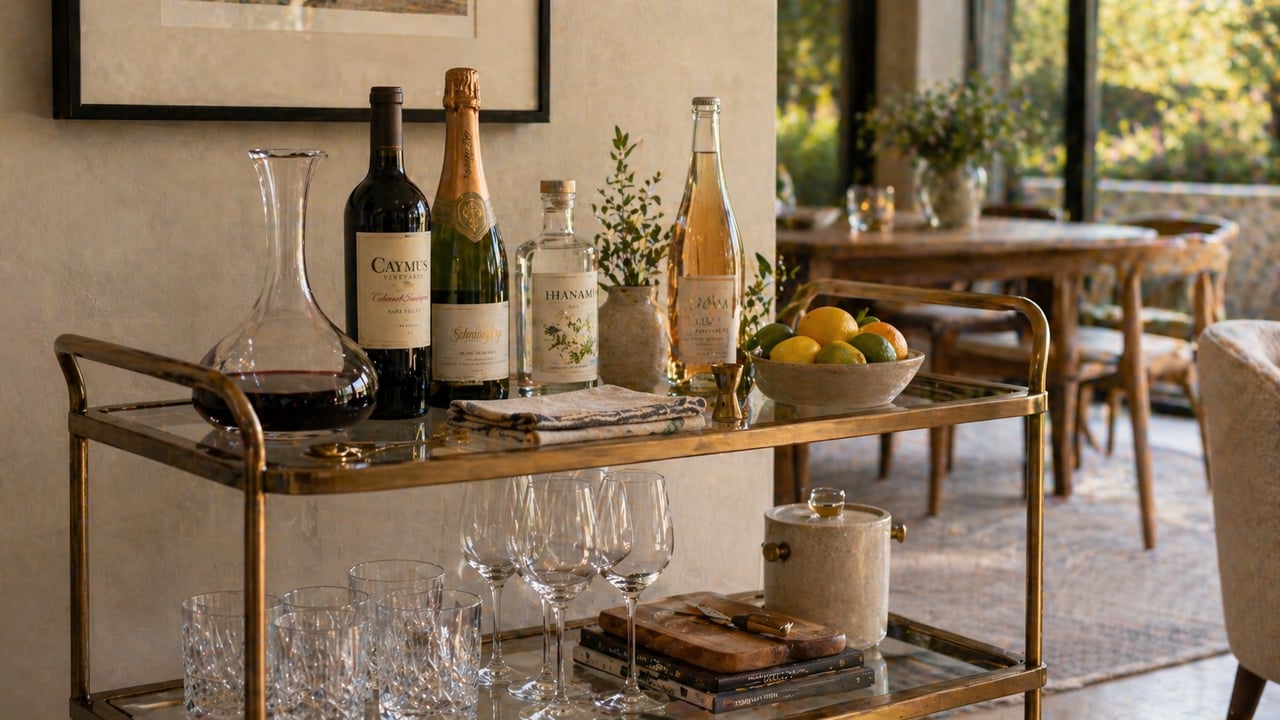
A well-styled bar cart is one of the highest-return investments you can make in your entertaining setup. It is functional, it is movable, and when done right it reads as a design object rather than a piece of equipment. In Wine Country the bar cart is also an extension of a broader story about hospitality: that drinks are ready, guests are expected, and someone has thought about what they might want.
Start with the cart itself. Brass or aged gold frames with glass or marble shelves feel natural in a Wine Country context and work with almost every interior palette. A darker frame in matte black or oiled bronze makes a stronger statement if your interiors can carry it. The styling is where most people either get it right or overcomplicate it. The top tier holds what you reach for most: a decanter with whatever you are currently pouring, two or three bottles selected for shape as much as content, and a small ice bucket if space allows. The lower tier is for glasses, a small cutting board, and one supporting bottle.
A note on non-alcoholic options: in 2026 it is no longer a niche consideration. A meaningful number of guests at any gathering may not be drinking, and offering a well-considered alternative — a quality sparkling water, a non-alcoholic botanical spirit, or a made-ahead shrub or mocktail — is part of what separates a thoughtful host from a careless one. Keep one option on the cart and treat it with the same visual intention as everything else.
Leave space on the cart. A crowded bar cart signals a lack of confidence. A calm one signals the host knows exactly what they are doing.
A decanted local Cabernet. A bottle of sparkling for arrivals. A small-batch local gin or vermouth for those who want something lighter. One quality non-alcoholic option. A ceramic bowl of citrus. A linen bar towel folded once on the lower shelf. That is the whole list. Anything more becomes noise.
How do you set up an outdoor patio for entertaining in Napa Valley in spring?
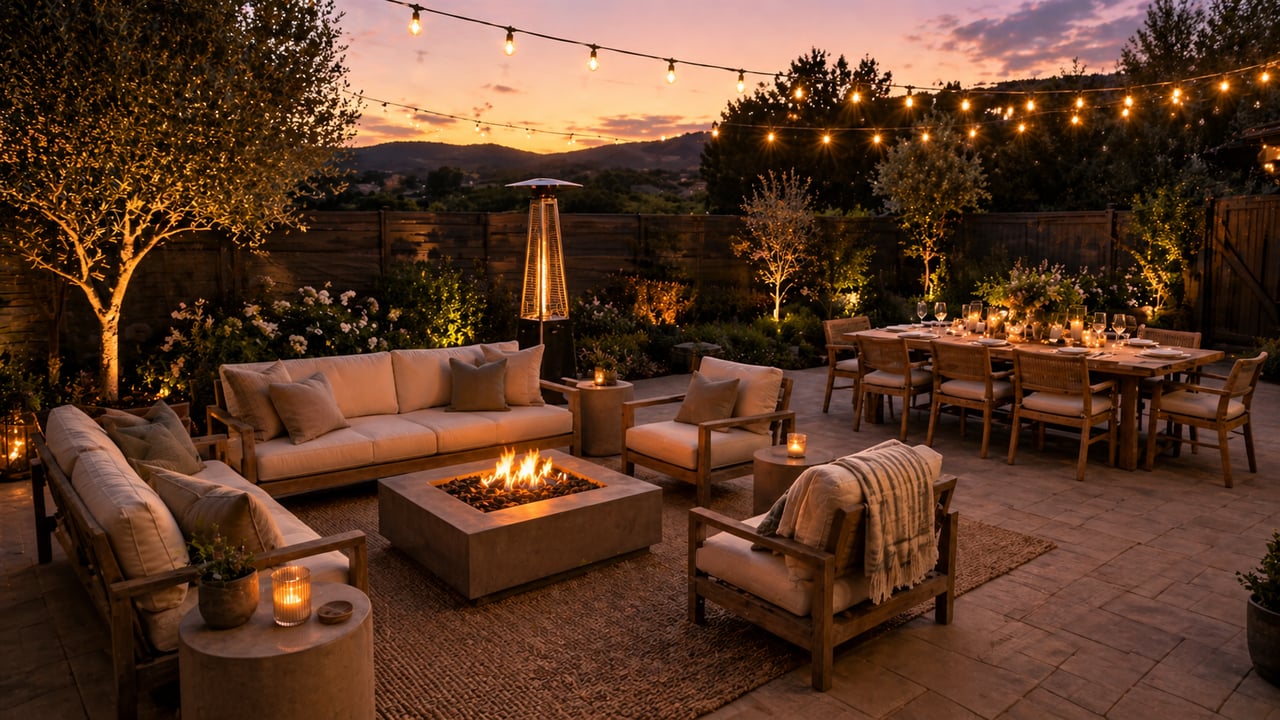
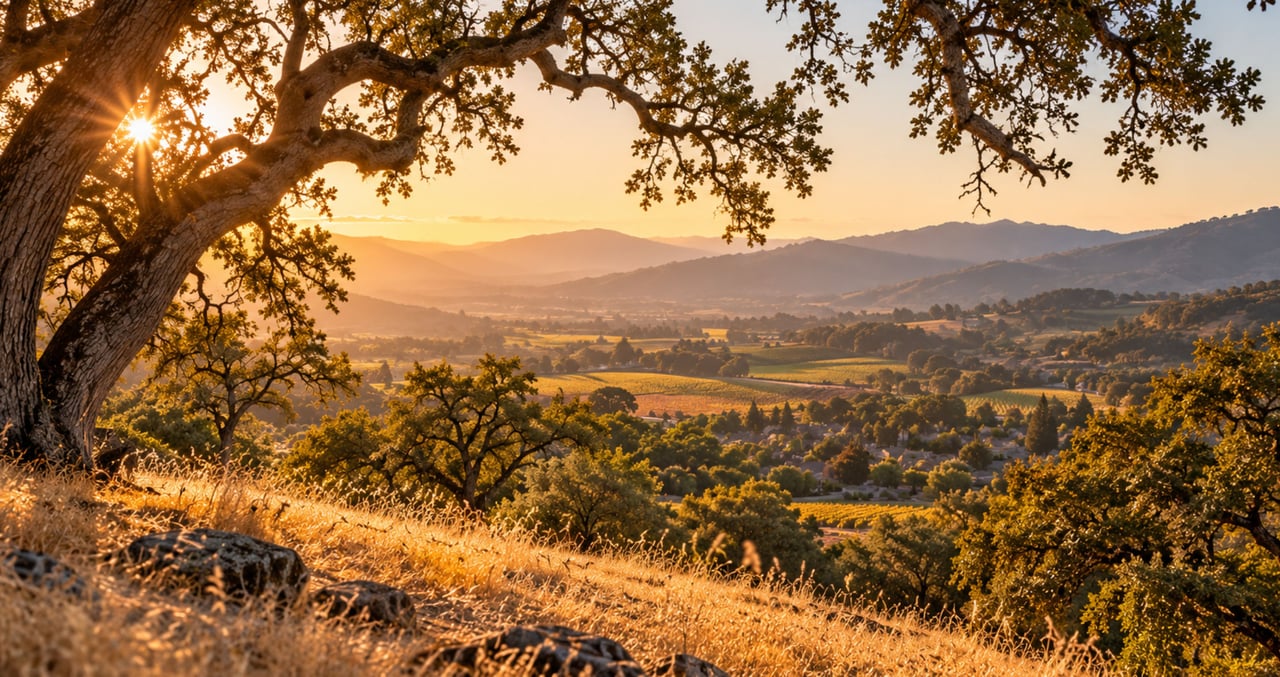
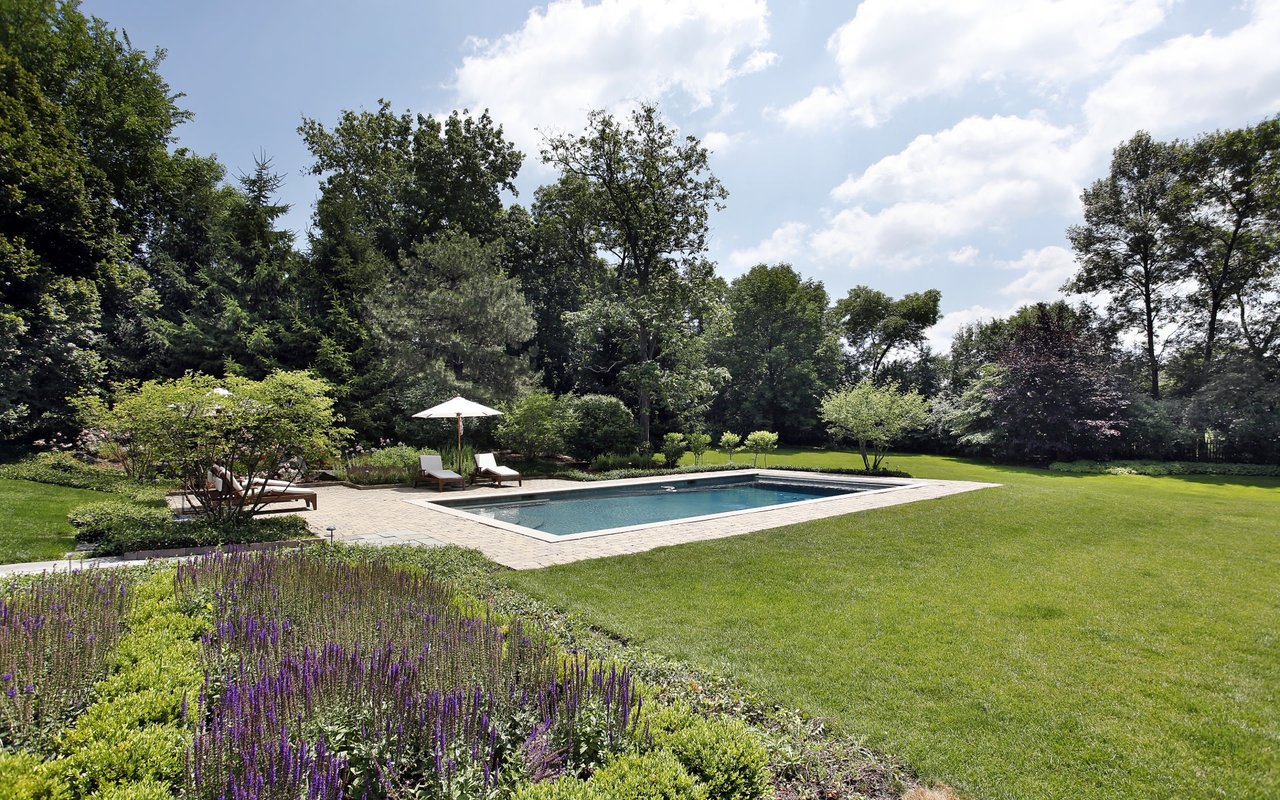
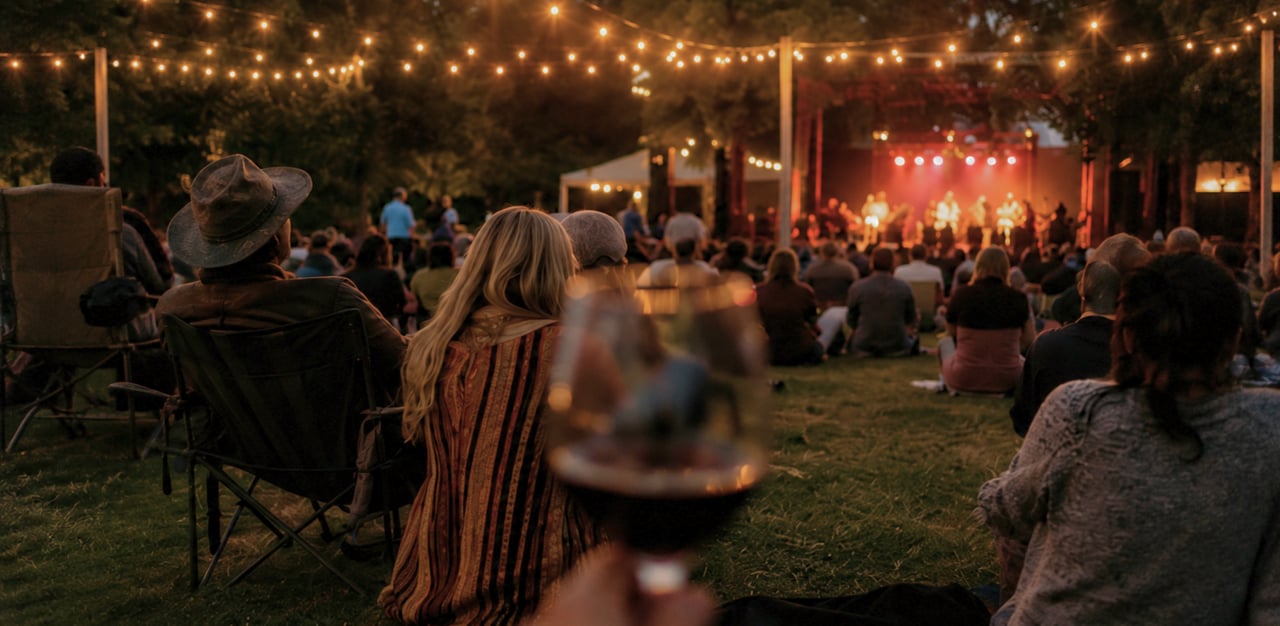
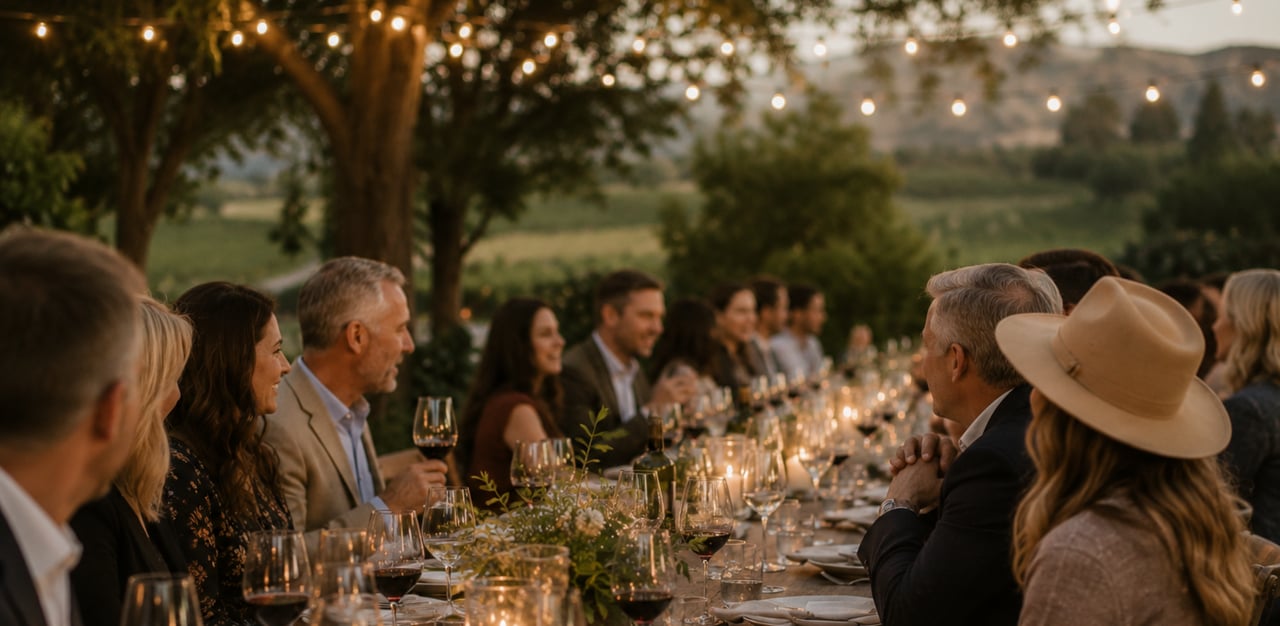
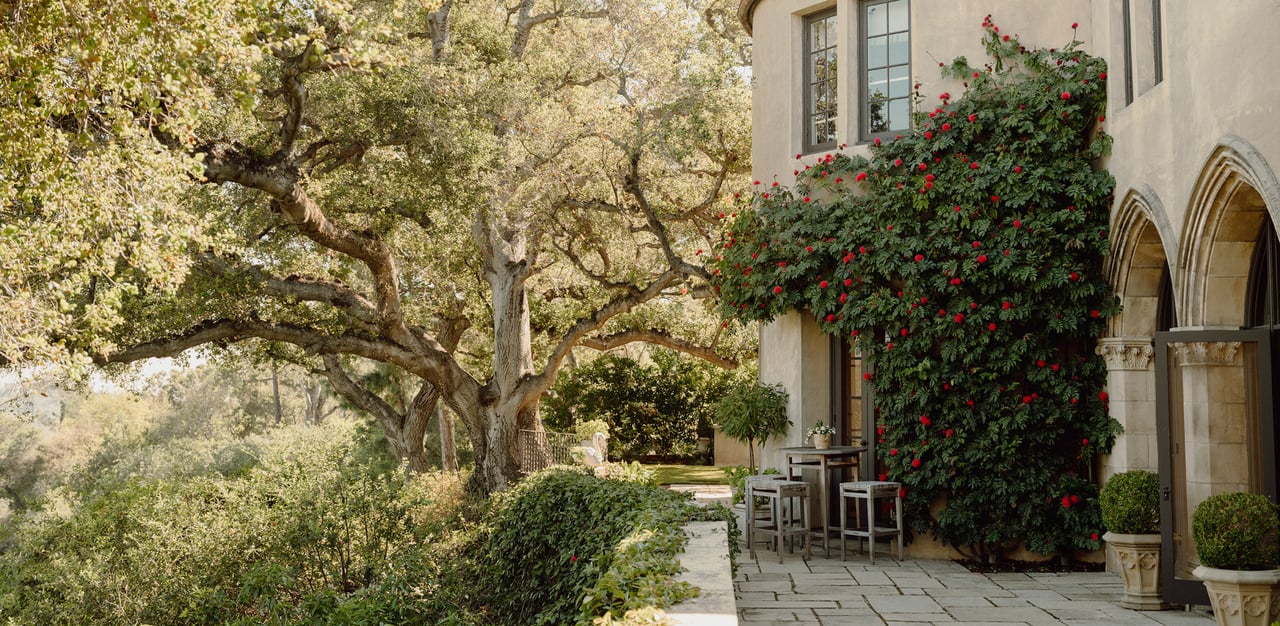
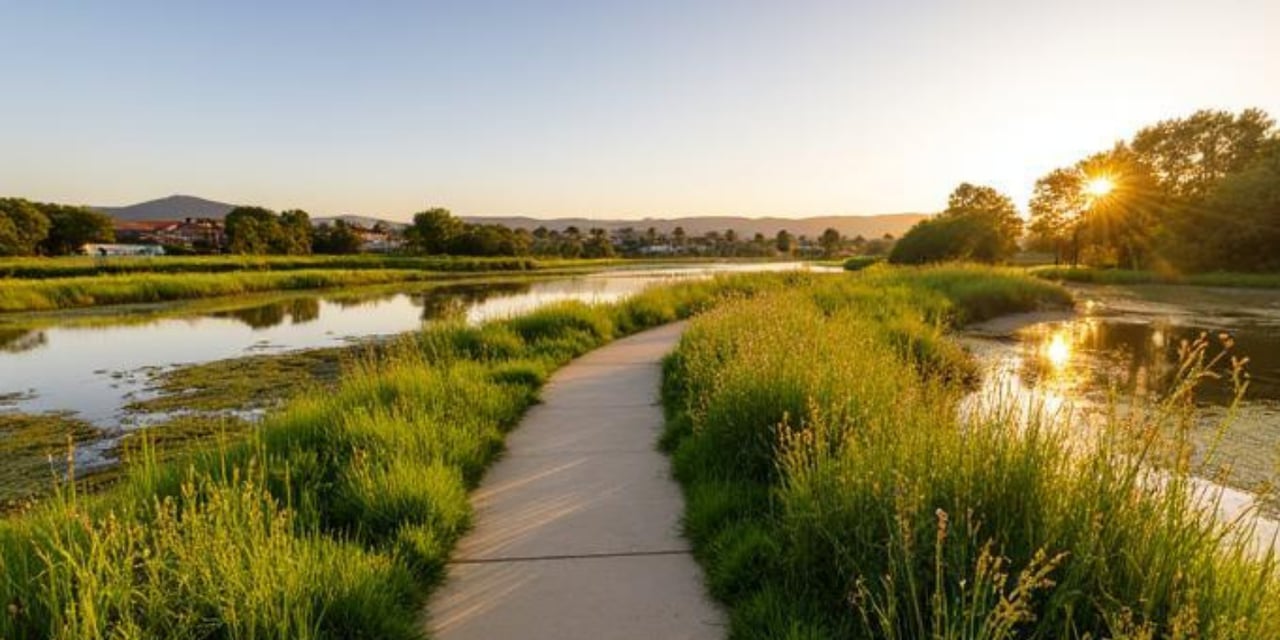
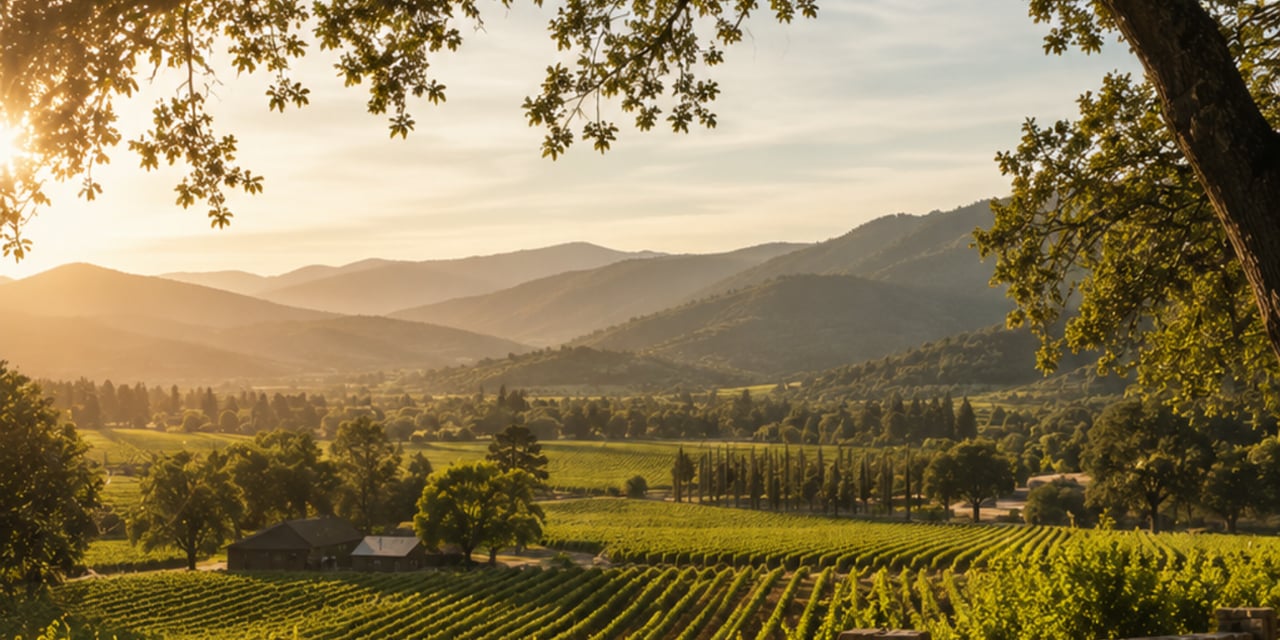
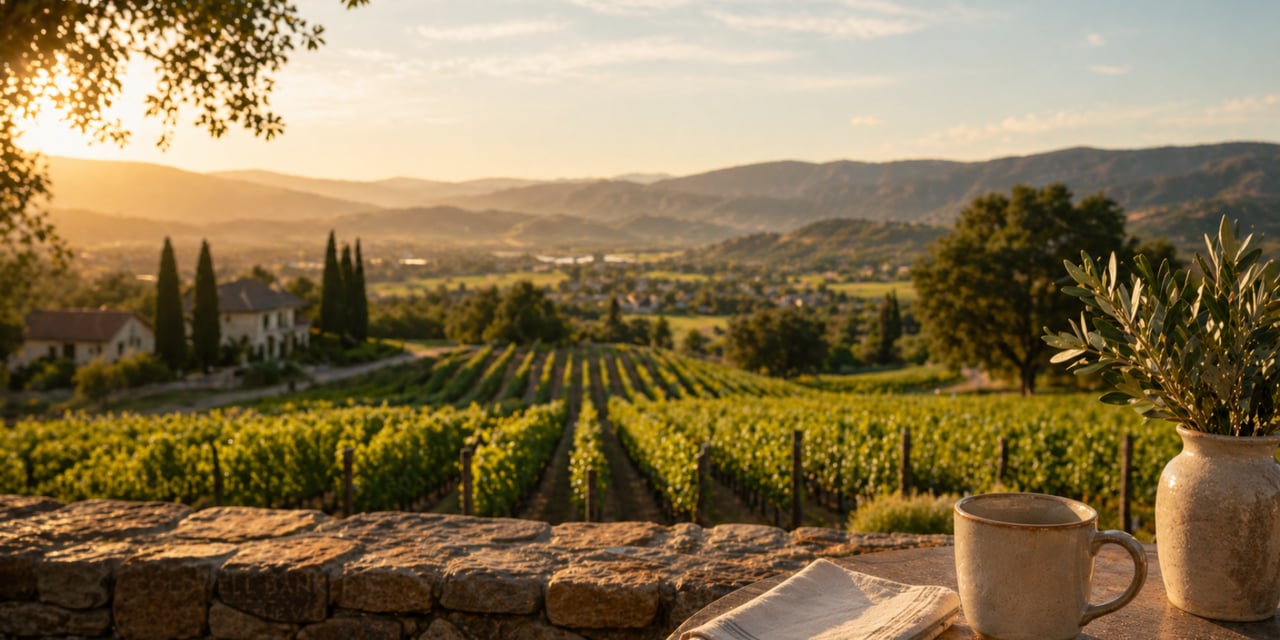
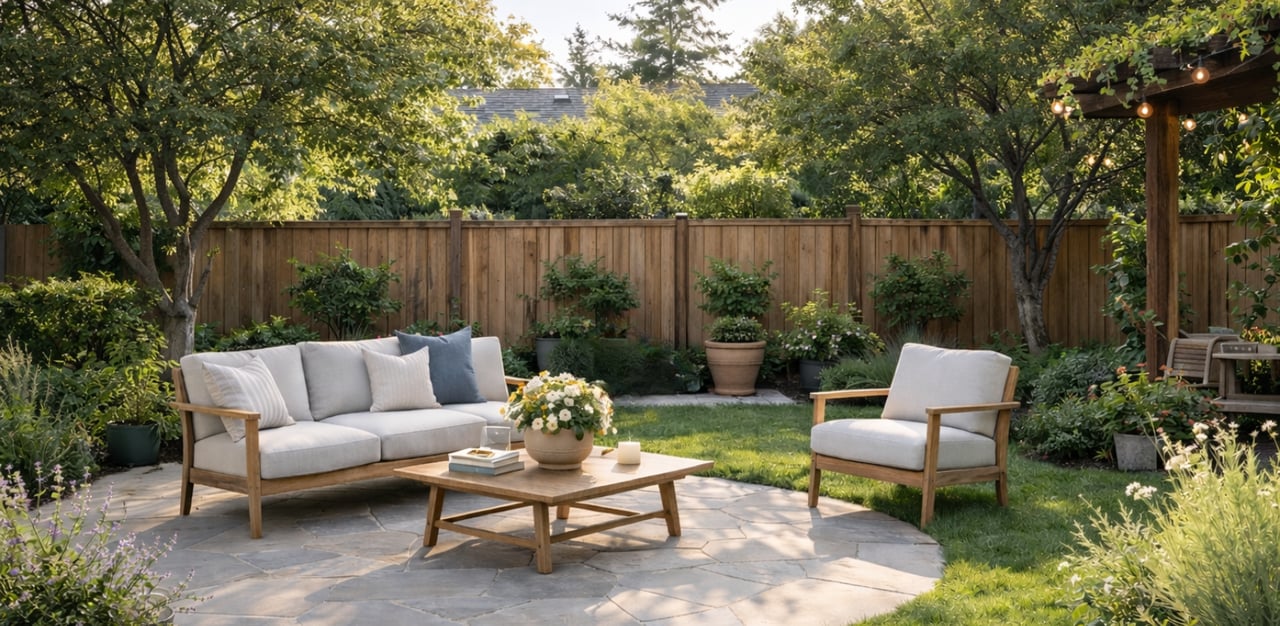
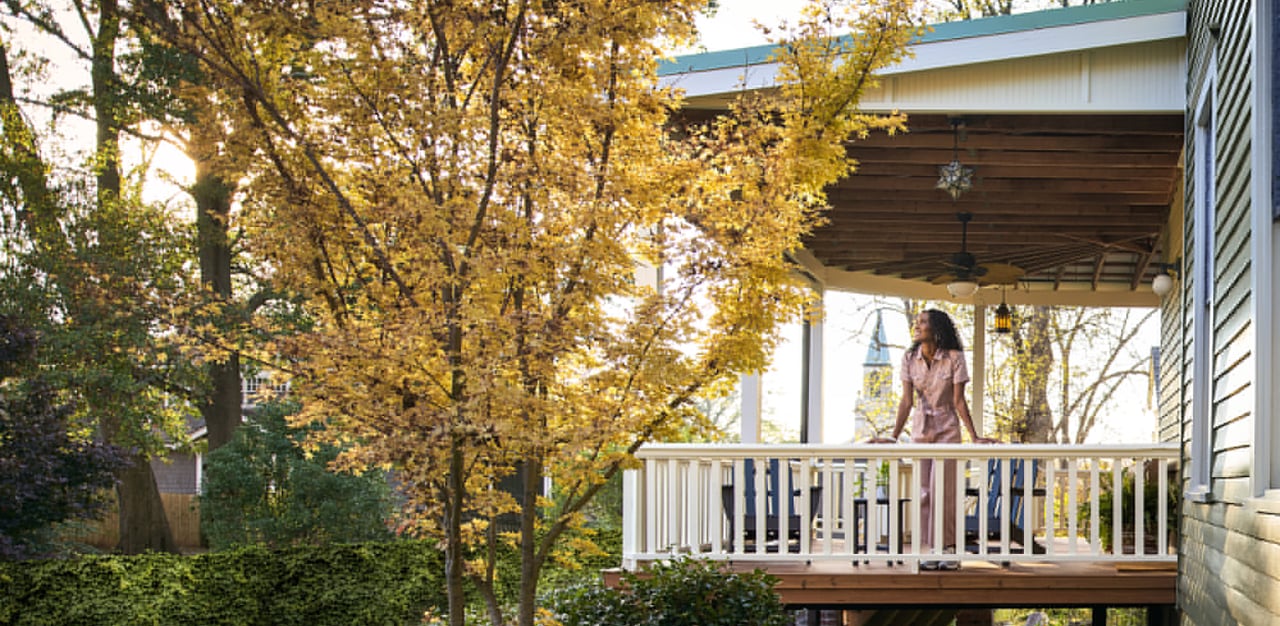
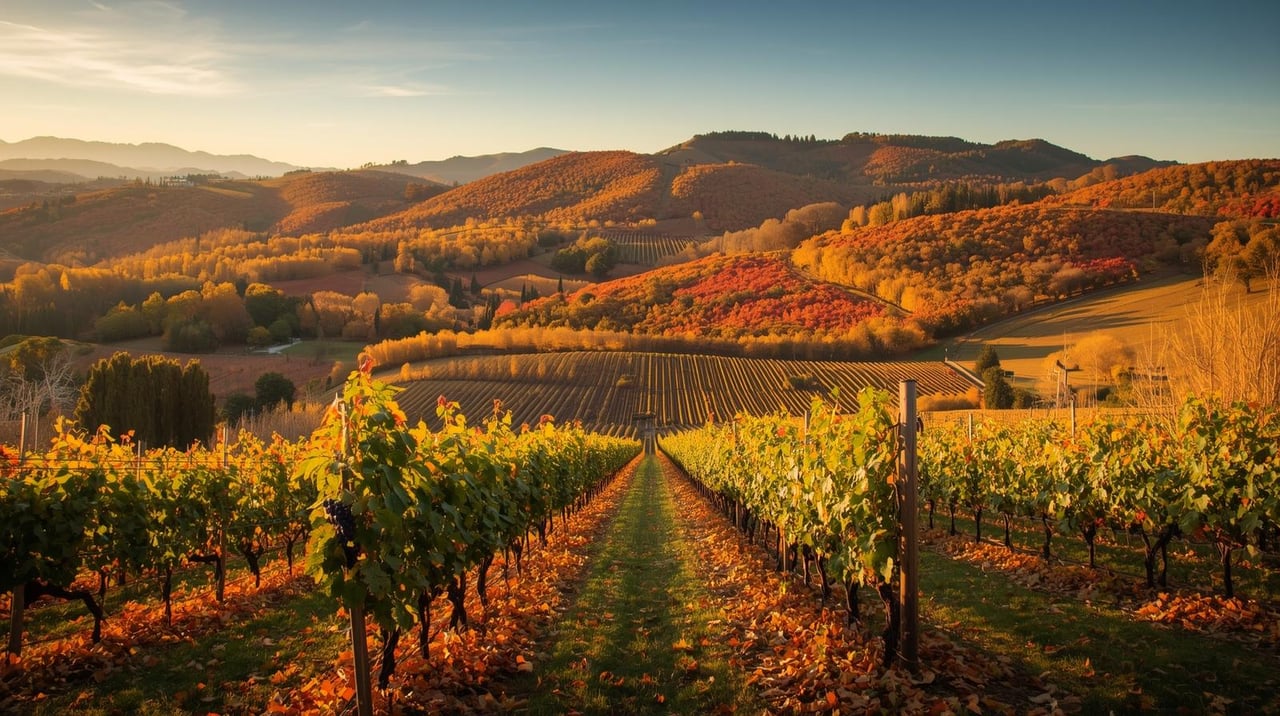
In Napa Valley, the outdoor space is not an extension of the home. It is the destination. Spring evenings here are warm enough to sit outside comfortably through dinner and well into the night, and the light at golden hour over the hills does something to a gathering that no interior can replicate. The question is not whether to entertain outside but how to make the space feel as considered and comfortable as the inside of your home.
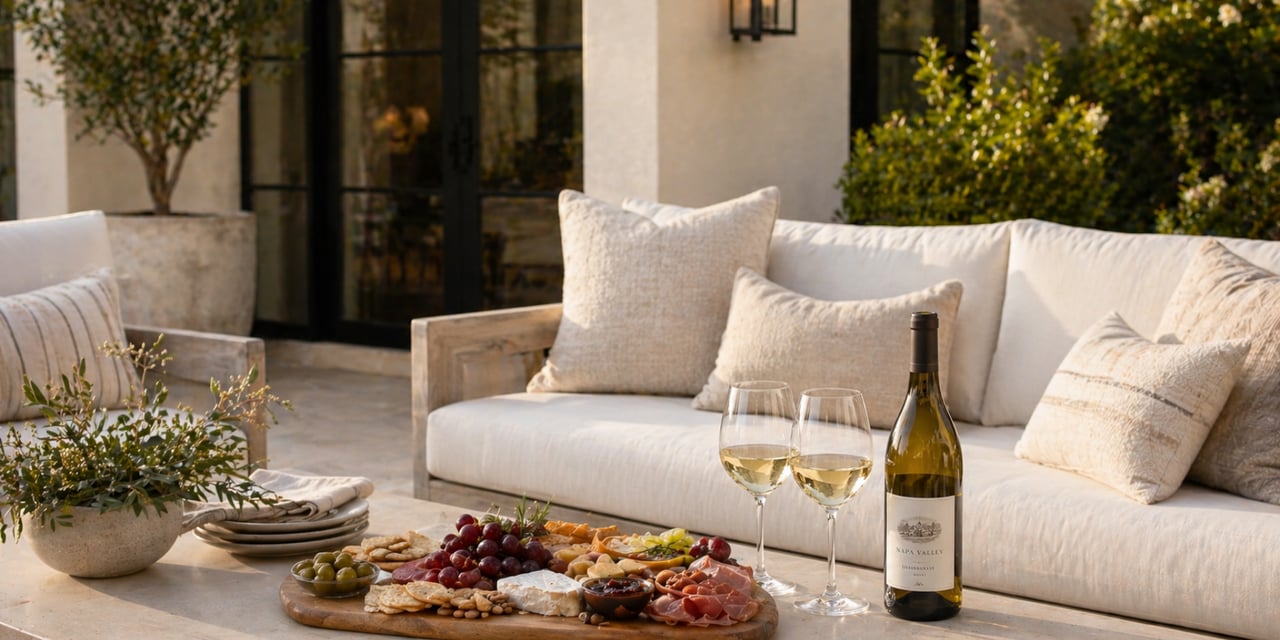
Start with seating that people actually want to stay in. Deep-cushioned outdoor sofas in natural tones have replaced the rigid teak dining chair as the standard for Wine Country patios. Linen-look outdoor fabric in cream, sand, or warm grey holds up to weather while looking far more refined than most outdoor textiles. Pair with a low outdoor coffee table in stone, concrete, or teak to ground the seating area and give guests somewhere to set a glass without reaching.
Think in zones. A conversational seating area separate from the dining table means people move naturally between the two throughout the evening rather than staying planted in one place. A side table near the seating area means the bar cart can stay inside and guests can still always reach a bottle without getting up.
Do not underestimate the temperature drop. Spring evenings in Napa Valley can fall into the low 50s after 8pm, especially in April and early May. A freestanding patio heater positioned near the seating area or a wood burning fire pit extends the evening by hours. Without one, guests start drifting inside the moment the sun disappears behind the hills. With one, they stay put and the night finds its own rhythm.
The best outdoor entertaining spaces do one thing well: they make it feel like leaving would be a mistake.
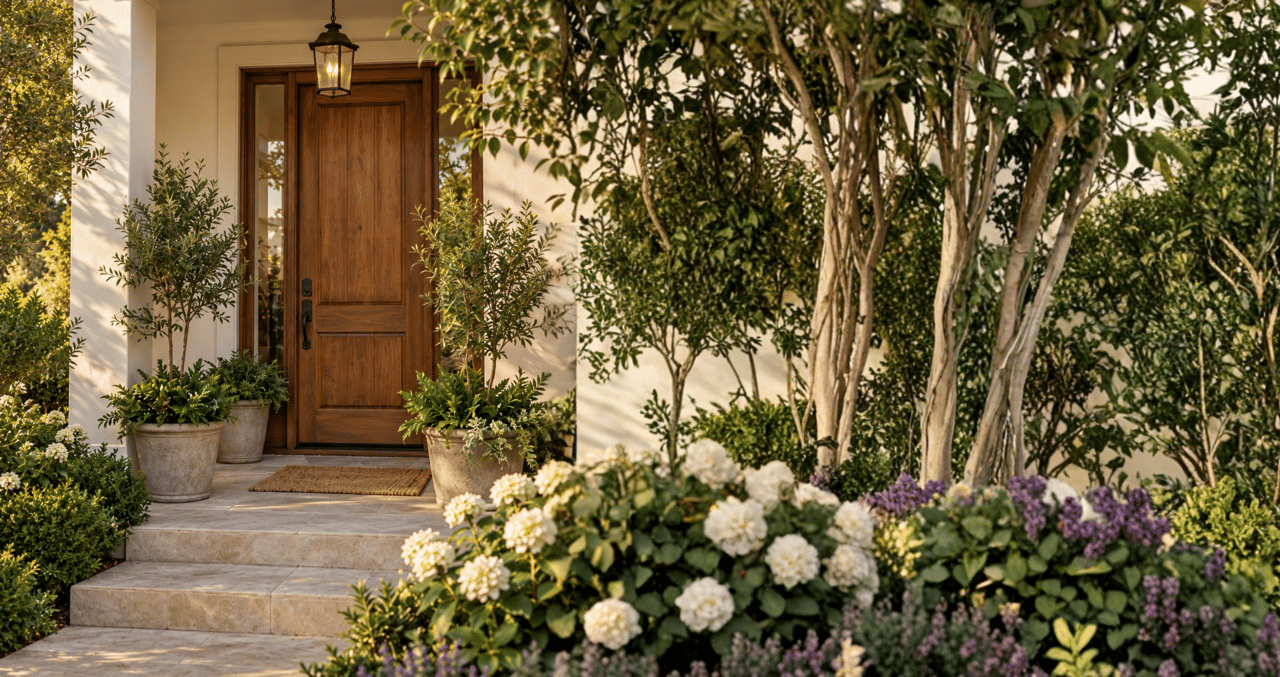
New cushion covers in outdoor linen-look fabric. A large outdoor rug to define the seating zone. One or two potted olive trees flanking the entrance or dining area. A freestanding patio heater or fire pit for cool evenings. String lights on a timer set for dusk. A large outdoor lantern for the dining table. That is a complete visual and functional refresh with no construction required.
How should you prepare the kitchen and dining table before guests arrive?
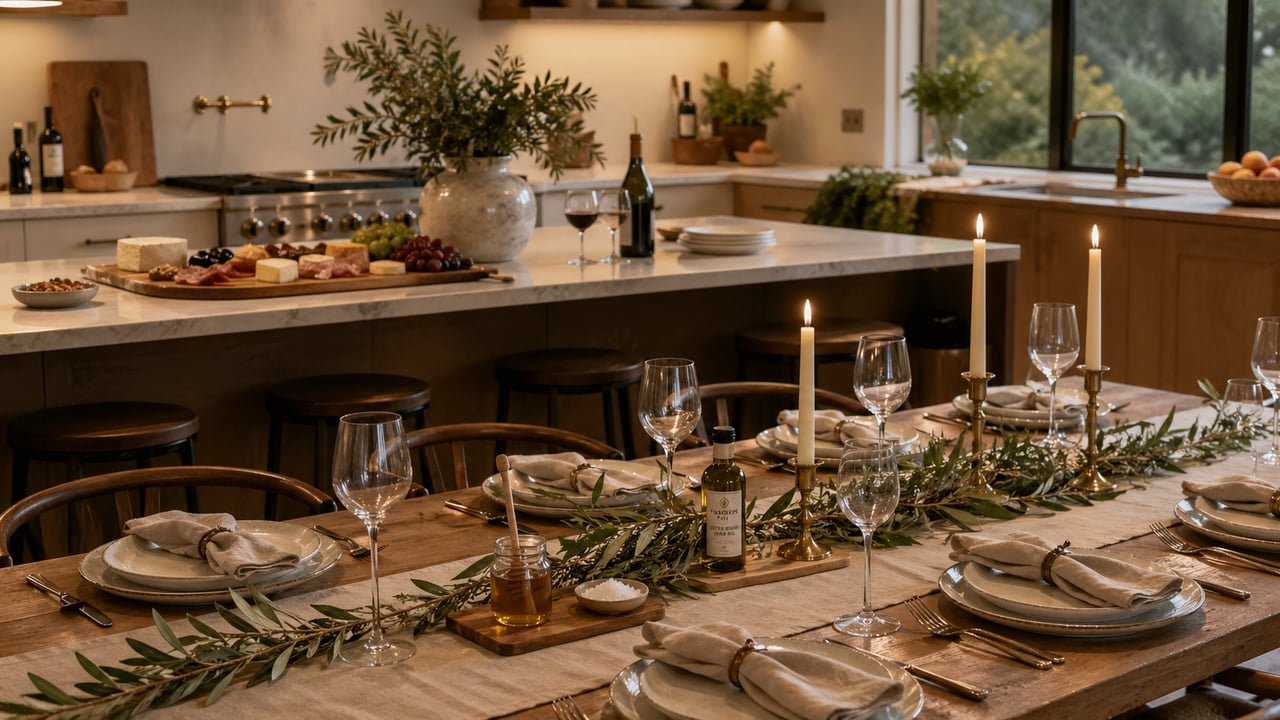
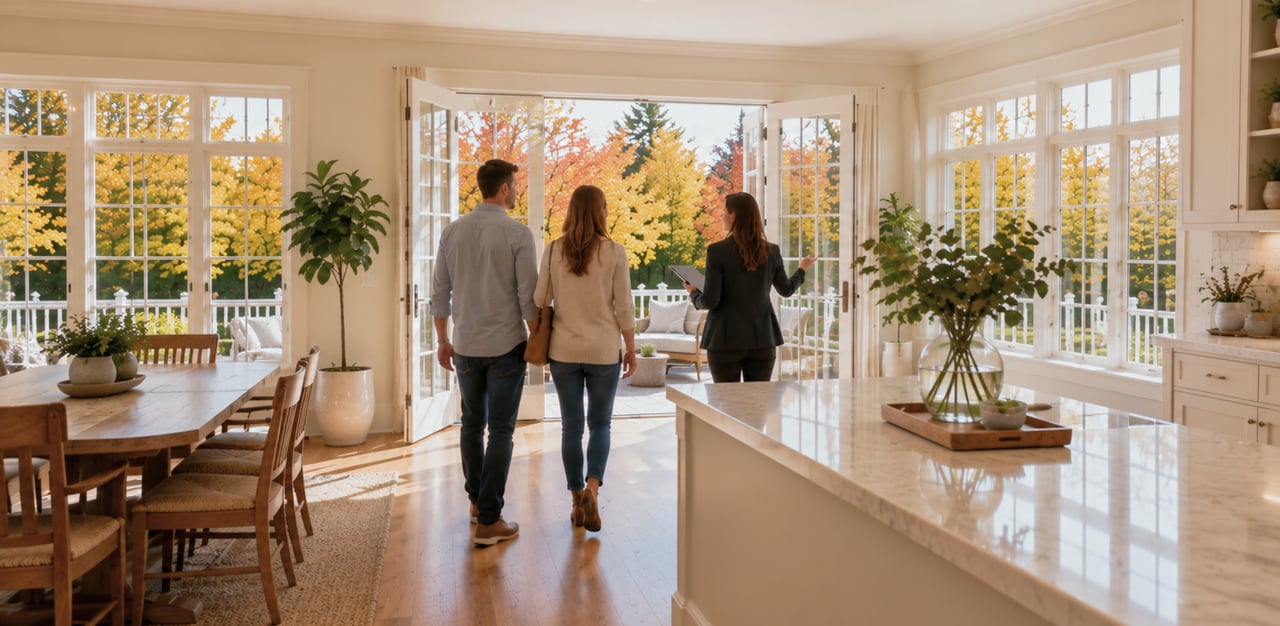
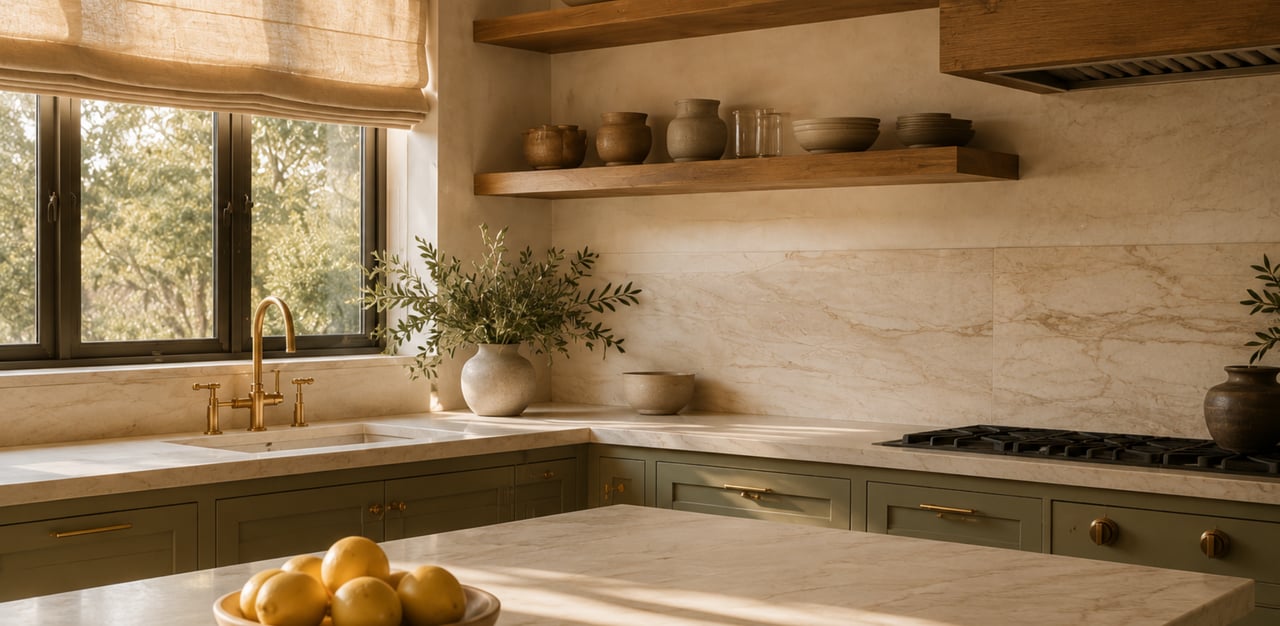
In Wine Country, the kitchen is rarely a separate room. It is the room. Guests gather at the island before dinner is served, and the act of cooking alongside someone or simply being present in the kitchen together is part of the experience. Setting up the kitchen for entertaining means thinking about how it reads when people are standing in it, not just moving through it on the way to the table.
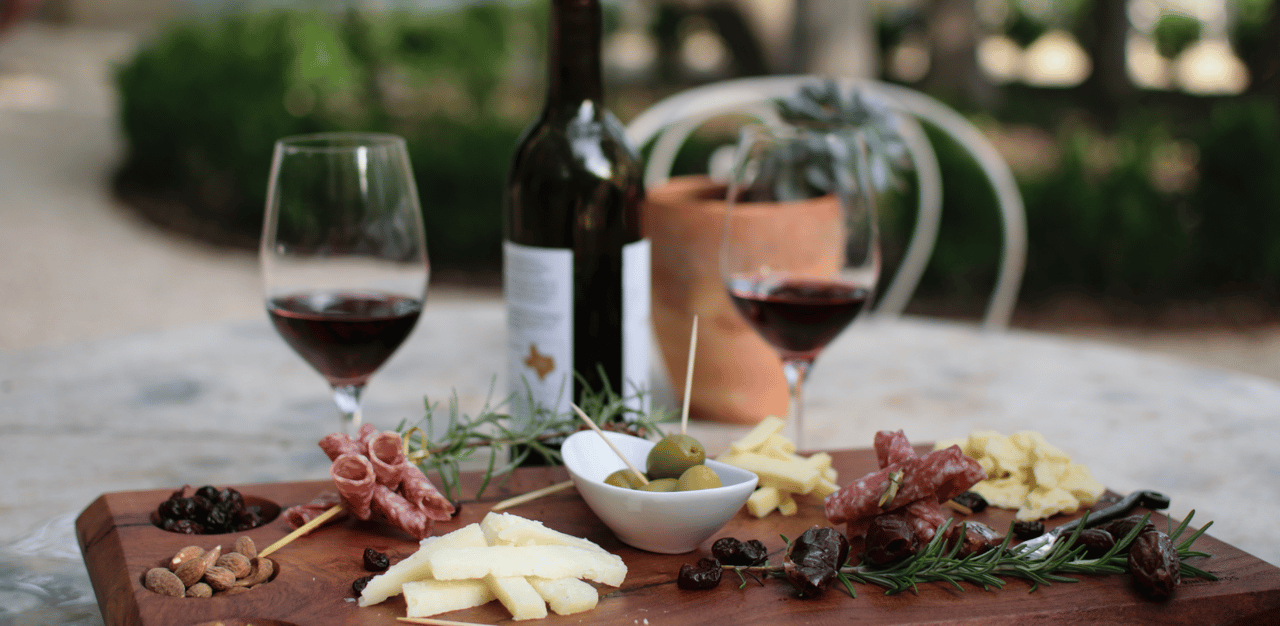
The island is your best asset. In the hour before guests arrive, transform it into a serve station: a wood or marble cutting board with local cheeses, charcuterie, a small dish of marcona almonds, and something from a local producer like a Napa Valley olive oil for dipping. Add a stack of small plates and the whole interaction becomes natural. Guests drift to the island, pour a glass, and the gathering starts before dinner has even been discussed.
Clear the counters of anything that is not beautiful or being used. A simple bunch of herbs in a glass of water on the windowsill signals that someone lives well here. A bowl of stone fruit from the Saturday farmers market at the Oxbow. A bottle already opened and breathing on the counter. These are the details that make a kitchen feel genuinely ready rather than hastily tidied.
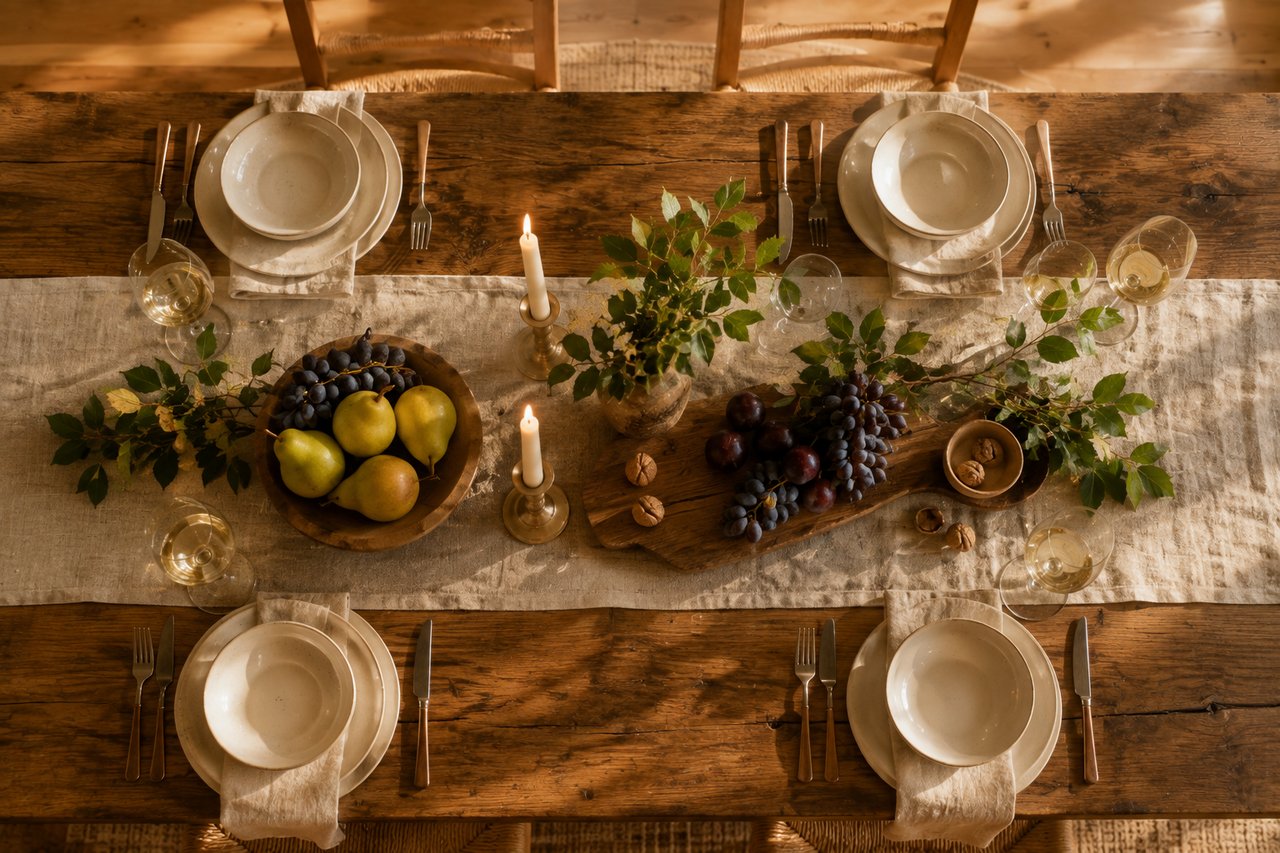
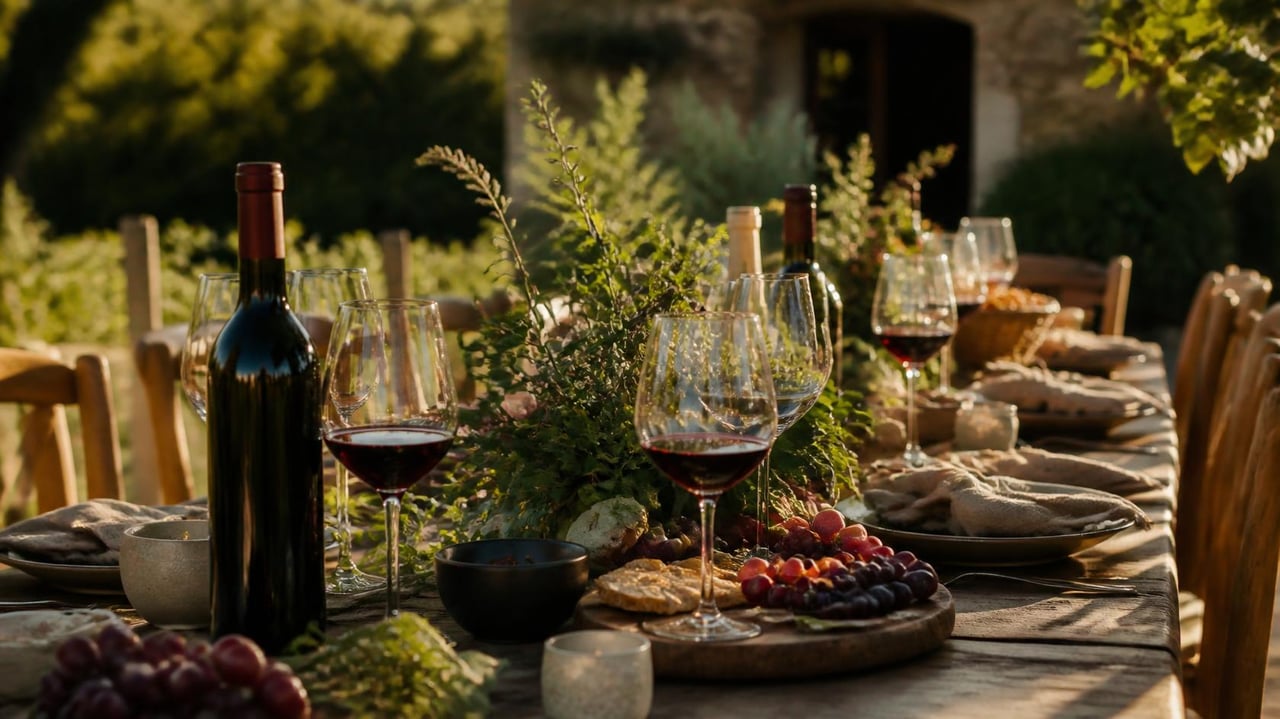
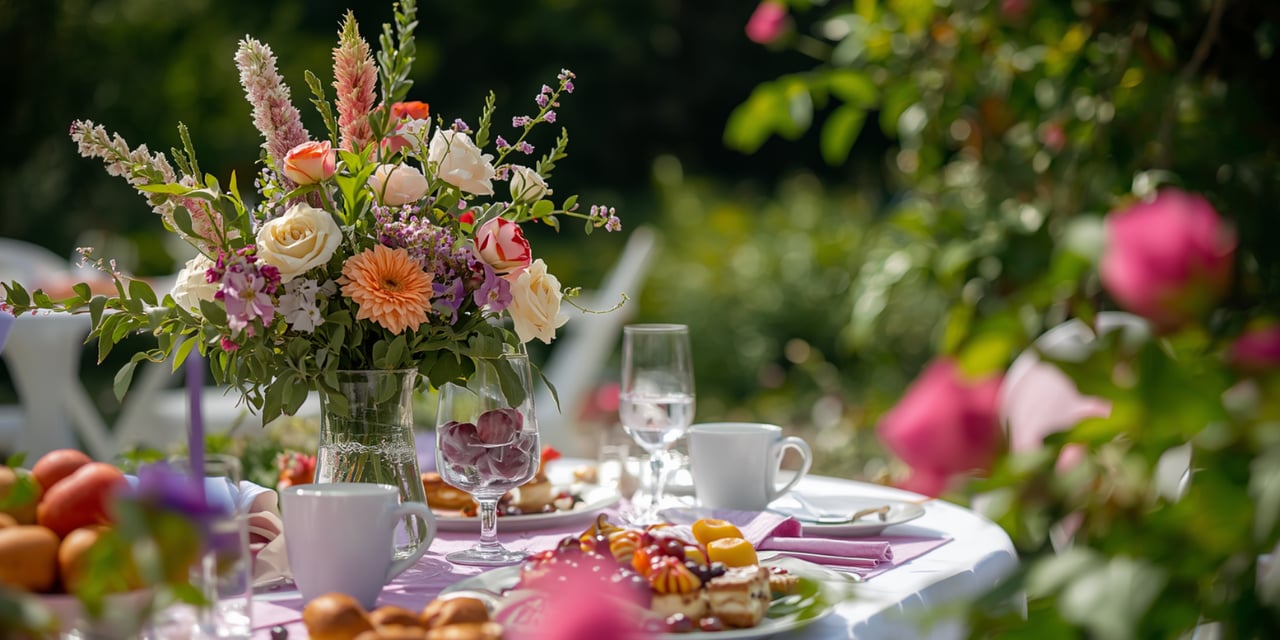
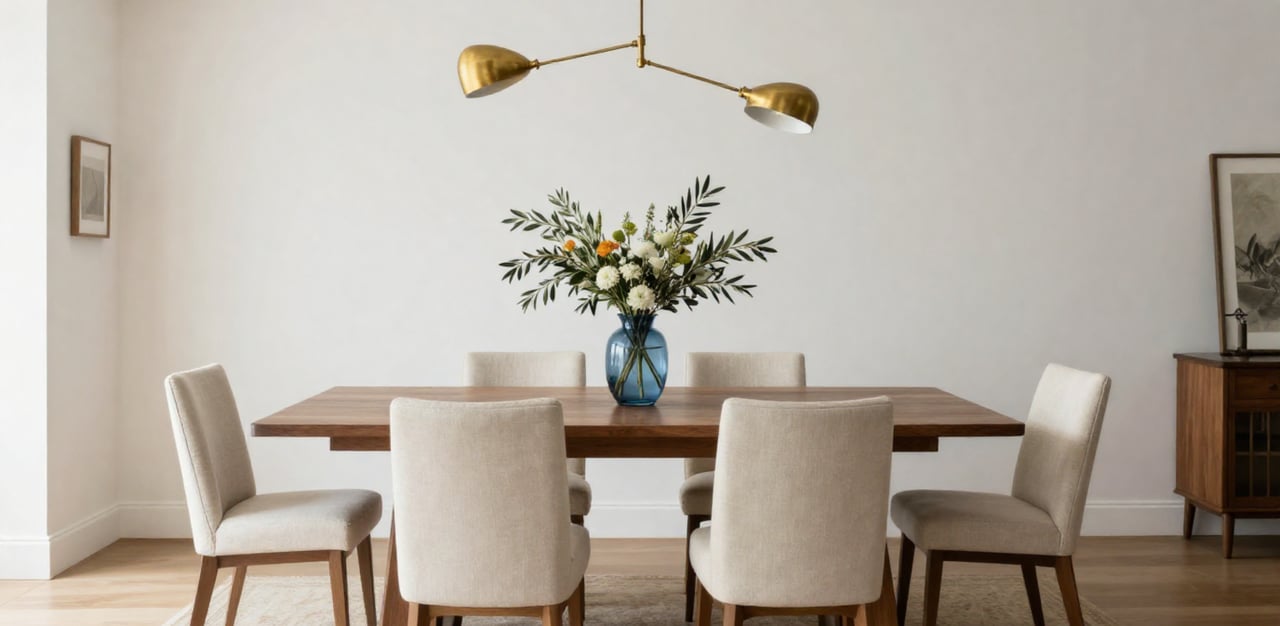
The dining table should be set before anyone walks in the door. Not formally but intentionally. Linen napkins rather than paper. Simple matte ceramic plates in a tone that works with the table material. A low centerpiece of olive branches, ranunculus, or fresh herbs from the garden. Three or four candles at varying heights down the center. Good stemware already set out at each place. When guests walk in and see a table that is already expecting them, the evening has already started well.
Natural linen napkins. Simple matte ceramic plates. A low runner of olive branches or fresh herbs down the center. Unscented taper candles in warm brass holders at varying heights. Local honey, sea salt, and a small bottle of Napa Valley olive oil left on the table throughout the meal. Elegant, unfussy, and deeply Wine Country.
What flowers and botanicals work best for Wine Country entertaining?
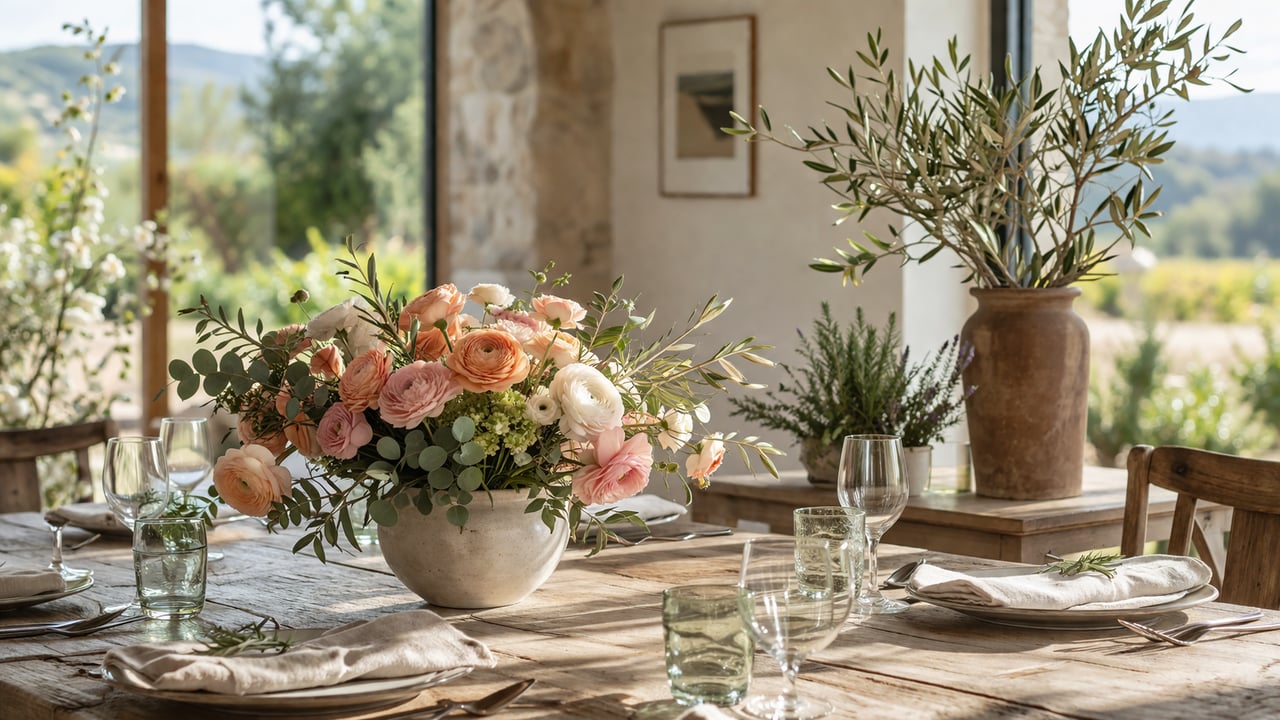
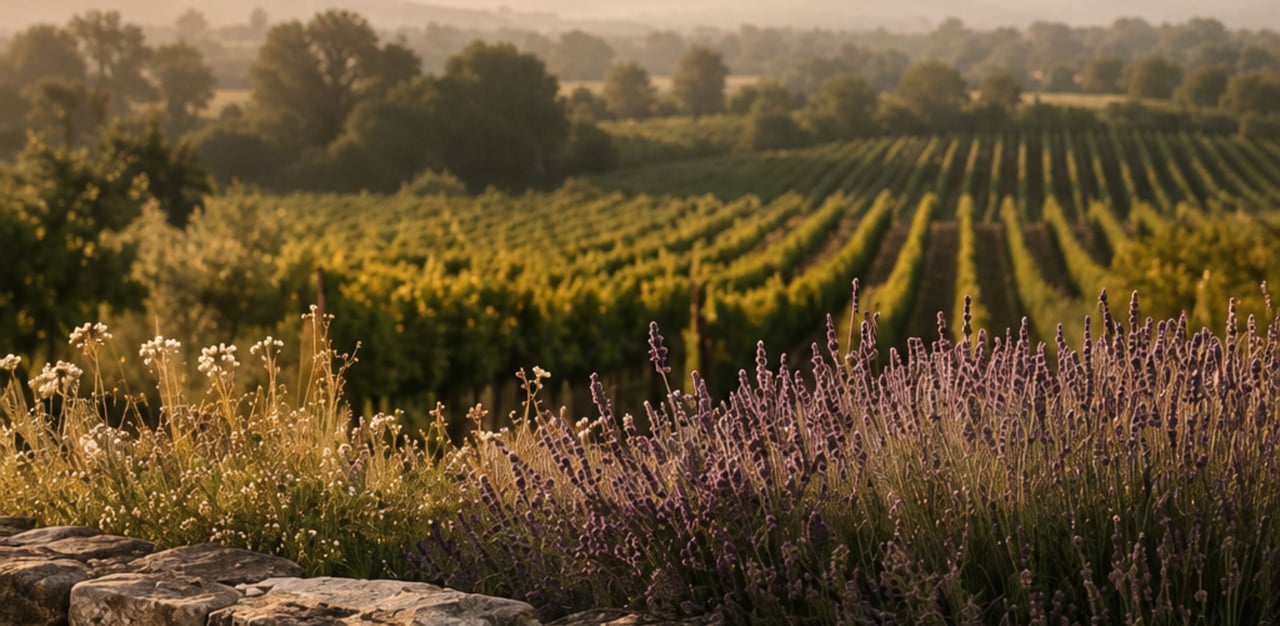
This is the detail that separates a Wine Country home from one that is simply trying to look like one. In spring, the valley is producing some of the most beautiful raw material for botanicals anywhere in the world. Ranunculus in apricot and blush. Long stems of olive with their silver green leaves. Bunches of rosemary in full flower. Early lavender. Peonies from the farmers market. Branches of fruit blossom from the garden. None of these require a florist or a large budget. They require attention to what is around you.
Keep arrangements low enough that people can see across the table. A dense cluster of ranunculus in a simple ceramic vase. A few long olive branches in a tall earthenware vessel in the entry. A small sprig of rosemary or a single stem laid across each napkin at the table. Fresh herbs bundled loosely in a glass of water on the kitchen counter. These are gestures rather than statements, and they land more powerfully than an elaborate arrangement that announces itself from across the room.
One important note for the dining table: avoid strongly scented flowers during the meal. Stargazer lilies, hyacinth, or anything with a heavy fragrance will compete directly with what is in the glass. Ranunculus, olive, eucalyptus, and herbs are all low-scent and safe to use throughout. Save the more fragrant blooms for the entry or the outdoor patio where they can breathe.
Olive branches. Ranunculus. Peonies. Eucalyptus. Rosemary in flower. Lavender. Bay laurel. Wild fennel fronds. Fruit blossom. All of these are growing within a few miles of most Wine Country homes in spring and all look extraordinary in a simple ceramic, glass, or earthenware vessel.
What lighting, scent, and sound tips work best for home entertaining?
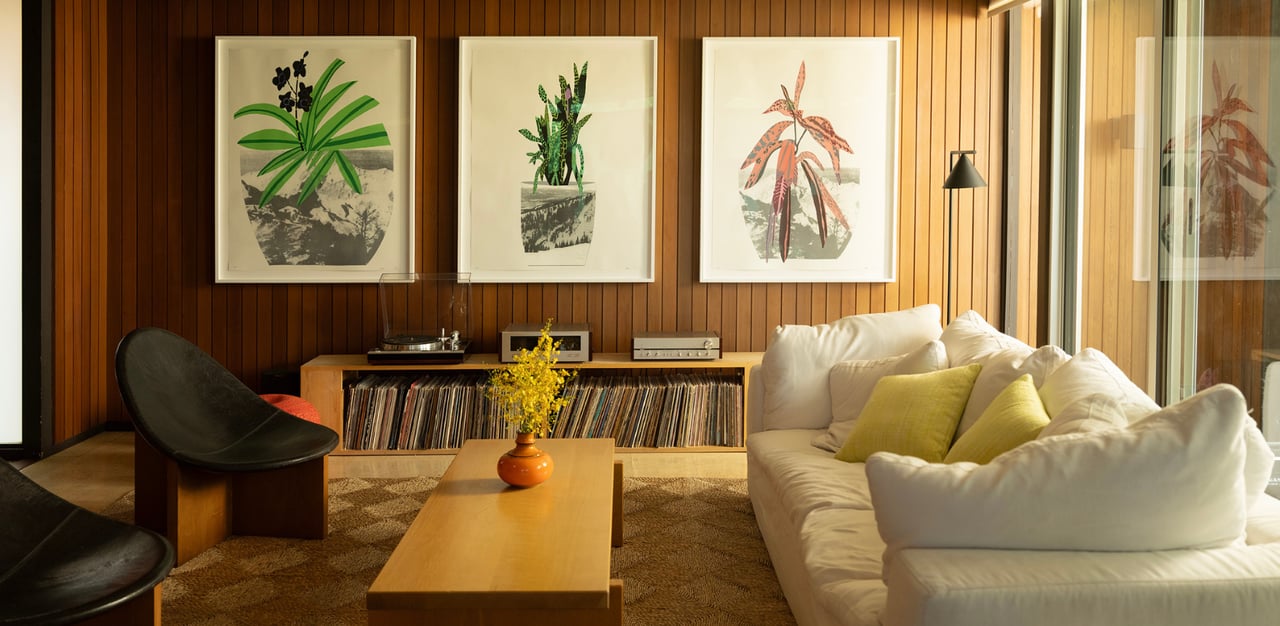
Lighting is the single most underestimated element of entertaining. It does not matter how thoughtfully a space is styled or how good the wine is. Overhead lighting at full brightness will flatten every effort you have made. Dimmed, layered, and warm light transforms the same space into something that feels genuinely special without changing a single piece of furniture.
The rule is simple: nothing overhead at full brightness. Use table lamps, floor lamps, candles, and string lights instead. If you only have overhead fixtures, put them on a dimmer and bring them to 20 or 30 percent at most. Every surface that can hold a candle should hold one. Unscented tapers on the dining table, votives on the bar cart, a larger pillar candle on the coffee table. The warmth and movement of candlelight does something to a room and to the people in it that no fixture can replicate.
Scent is the first thing your guests experience and the thing they are least consciously aware of. The entry of your home should have one subtle welcoming scent: a single quality candle, a diffuser with something warm and understated like cedarwood or vetiver, or simply the smell of something good already cooking. Keep competing scents out of the dining and living areas entirely. Nothing should fight the wine in the glass.
Sound is the other element most hosts overlook entirely. A playlist running at a volume where guests can talk without raising their voices but silence is never uncomfortable sets the tone before anyone has taken a sip. In Wine Country that often means something unhurried: soft jazz, acoustic guitar, or ambient instrumental. Music that acknowledges the pace of the valley rather than fighting it. Start it before anyone arrives so the room already has a mood when the first guest walks in the door.
You are not just setting a scene. You are setting the conditions for the kind of evening that does not end until someone notices the candles have burned low.
Dimmers on or overhead lights off. Table lamps and floor lamps on. Candles lit 20 minutes before guests arrive. One scented candle in the entry only since nothing should compete with the wine. Playlist at conversation volume. Outdoor string lights on a timer set for dusk. Patio heater on 15 minutes before moving outside. Temperature inside set slightly cooler than you think since guests and cooking will warm the space quickly.
A Home That Is Ready for
the Life You Want to Live
The homes that entertain best in Napa Valley are not the largest or the most expensively furnished. They are the ones that have been set up with intention. If you are thinking about buying, selling, or simply want to know what your home is worth in today's market, our team at Coldwell Banker Brokers of the Valley would love to connect.
AI-Assisted Content: This post was created with the assistance of artificial intelligence and reviewed by the team at Coldwell Banker Brokers of the Valley.